
By Ar. Nitin Pande | Principal Architect, Pande & Associates
Memorial architecture has traditionally expressed remembrance through monuments, sculptures, inscriptions and symbolic spaces.
Such places preserve collective or personal memories and provide opportunities for reflection.
But can a memorial do more than commemorate the past?
Can it become a place where memory continues to generate knowledge, relationships, environmental awareness and community value?
This question forms the foundation of our interest in Living Memorials.
From Static Remembrance to Continuing Relevance
A conventional memorial often establishes a dedicated place for remembrance.
A Living Memorial extends this idea by incorporating activities that sustain a meaningful relationship between memory and contemporary life.
A memorial might accommodate a library, a learning space, a community gathering area, a garden or a cultural activity.
These functions do not replace remembrance. They create additional ways for people to engage with it.
The intention is to allow memory to remain present through useful and meaningful experiences.
Architecture as a Carrier of Memory
Architecture can communicate memory without relying exclusively on written narratives.
Materials may recall local traditions. Courtyards may encourage gathering. Light and shadow may create contemplative experiences. Landscapes may represent continuity, renewal and the passage of time.
The architectural language of remembrance can therefore be both symbolic and functional.
A carefully designed space can allow different generations to interpret the same memory in their own ways.
Matrika: Exploring the Idea of a Living Memorial
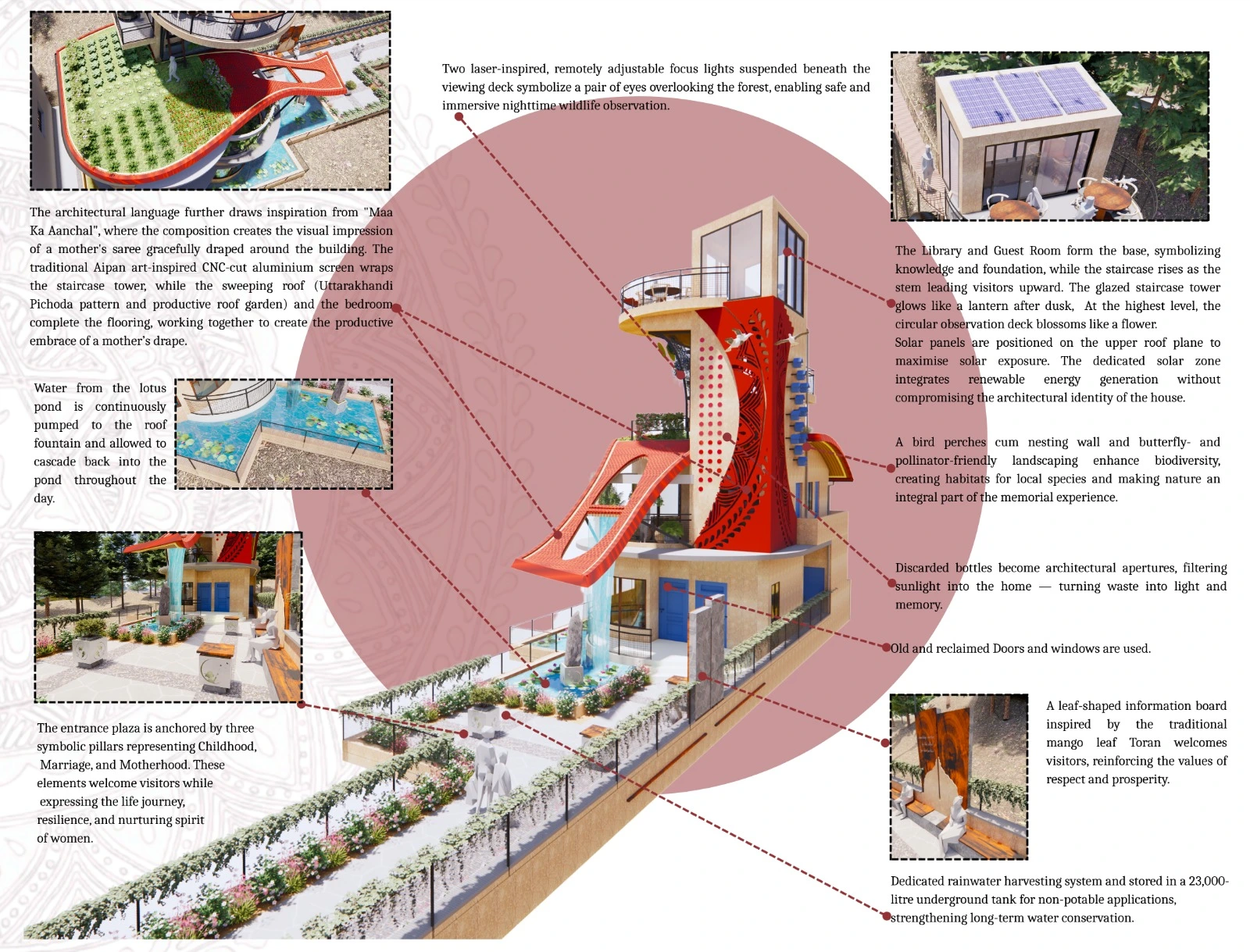
Matrika, a project associated with Pande & Associates in Manila, Uttarakhand, explores the relationship between remembrance, hospitality, landscape and continuing usefulness.
Its design concept brings together spaces for reflection and shared experience with elements such as a library, hospitality accommodation and productive landscape.
The architectural exploration also draws on regional references, including traditional materials, local cultural expression and the relationship between built form and the surrounding terrain.
Ideas such as rammed-earth construction, solar integration, agricultural terraces and symbolic architectural screens form part of the project's design narrative.
The ambition is to create a place where remembrance is not isolated from life, but becomes connected with learning, nature and human interaction.
These are design intentions; their realised environmental and operational performance must be evaluated separately.
Why Living Memorials Matter
They connect generations
Spaces for learning and gathering allow memories and stories to be shared with people who may not have experienced the original events.
They support cultural continuity
Architecture can interpret local traditions without simply reproducing historical forms.
They create continuing public value
Libraries, gardens, community facilities and other useful spaces can give memorial environments a sustained role.
They encourage environmental responsibility
Landscape and resource-conscious design can connect remembrance with stewardship of the future.
Memory as a Responsibility to the Future
The deepest purpose of a memorial may not be only to preserve what has passed.
It may also be to inspire what comes next.
A Living Memorial invites architecture to become an active participant in this process.
At Pande & Associates, we see this approach as closely connected with Productive Architecture: buildings and landscapes that aspire to create continuing value through their existence.
A meaningful memorial should not only remind us of a life or an event. It should inspire something valuable to continue.
Frequently Asked Questions
What is a Living Memorial in architecture?
A Living Memorial is a commemorative environment that combines remembrance with ongoing activities such as learning, community interaction, cultural engagement or landscape stewardship.
How is a Living Memorial different from a monument?
A monument primarily commemorates, while a Living Memorial can additionally support continuing public or community use.
Can memorial architecture incorporate sustainable design?
Yes. Responsible material choices, passive environmental strategies, landscape integration and renewable energy can be explored according to the project's context and feasibility.